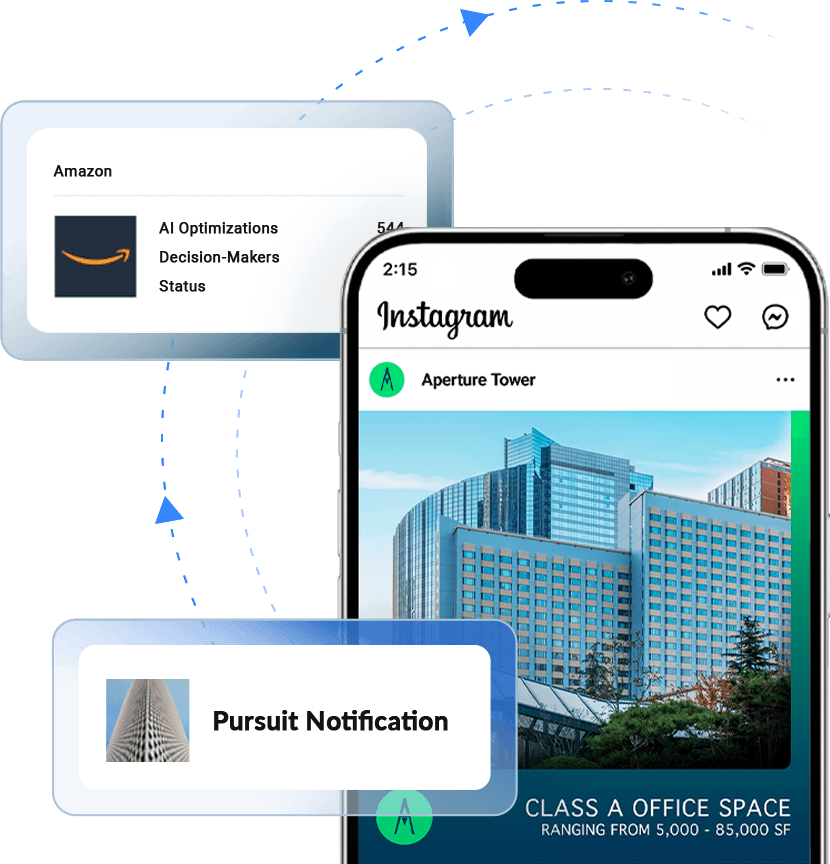
Securing a tour remains one of the clearest signals that a prospect is moving from interest to intent. But during a time where decision-makers filter information across a range of platforms, relying on a single channel rarely delivers the results teams expect. Visibility is fragmented. Attention is divided. And a property that appears only once—or only in one place—risks being forgotten long before a tour is even considered.
A multi-channel digital strategy solves that problem by meeting prospects where they’re paying attention and reinforcing the property story through consistent, coordinated touchpoints.
Why Multi-Channel Visibility Matters
The modern CRE decision-maker rarely engages linearly. They move between email, social, listing platforms, retargeting ads, and search, often within the same day. Each encounter influences familiarity, trust, and ultimately whether a tour gets booked.
And we now have clear data showing the impact. In 2025, RealtyAds’ Class A Office Leasing Report found that AI-driven digital marketing, including coordinated multi-channel outreach—generated a +30% increase in property tours for Class A assets. This validates what many teams experience anecdotally: when visibility is consistent and reinforced across multiple channels, intent accelerates.
The industry is shifting as well. According to some reports, 76% of CRE firms are now testing or actively using AI for core functions such as marketing. That adoption signals not just a trend but a competitive baseline, modern leasing teams can’t rely on single-channel strategies when the market is moving toward smarter, AI-enabled, multi-touch engagement.
The Role Each Channel Plays
A strong multi-channel strategy isn’t about showing up everywhere, it’s about showing up with purpose in the places that actually influence leasing momentum.
Email
Email anchors the narrative. It gives brokers and tenants a clear way to review availability, dig into floor plans, understand amenities, and take next steps. A strong CTA creates a direct path to tour scheduling, while automated follow-ups ensure the conversation continues.
Social Media
Social brings the property to life. Video walk-throughs, amenity highlights, and short-form storytelling create frequent, lightweight impressions. For brokers and asset managers who spend substantial time on LinkedIn, repetition here elevates the property into the active consideration set.
Digital Advertising
Digital advertising—especially AI-targeted display and retargeting, ensures consistent touch-points throughout the research phase. If a prospect visited your listing but didn’t schedule a tour, targeted ads can re-engage them at the exact moment they’re weighing options. Paid search adds intent-based traffic, capturing those actively evaluating competing properties.
Where Traditional Efforts Fall Short
Many teams believe they’re executing multi-channel outreach, but performance breaks down when channels operate in isolation. Email may say one thing, social messaging another, and ads something entirely different. Without alignment in narrative, creative, and CTA, the buyer journey becomes disjointed, and prospects fall out of the funnel.
Other barriers are equally common: infrequent posting, inconsistent retargeting, or property pages that aren’t built to convert. In CRE, where leasing cycles can stretch 12+ months, small gaps in visibility compound into lost momentum and fewer tours.
Conclusion
A multi-channel digital strategy isn’t just a broader distribution plan; it’s a system that keeps a property visible, credible, and top-of-mind. And in 2025, the data confirms why it matters: AI-enabled, multi-channel outreach is driving significant increases in tour activity, and the majority of CRE firms are modernizing their marketing approach accordingly.
When prospects encounter the same story across email, social, and advertising, the repetition does the work. It reduces friction. It builds confidence. And it makes the decision to tour feel both natural and well-supported.