
What Is Generative Engine Optimization (GEO)?
GEO is the practice of structuring content so AI-powered search engines like ChatGPT, Perplexity, or Google’s AI Overviews can reference your brand directly within generated answers.
Unlike SEO, which focuses on ranking in traditional search results, GEO prepares content for:
- AI citations in platforms like ChatGPT or Perplexity
- Brand mentions within AI-generated summaries
- Digital visibility in a “zero-click” environment, where users get answers without leaving the platform
Why Does It Matter?
Search behavior is changing fast….
- A study of 3,000 websites found that 63% now receive some traffic from AI chatbots like ChatGPT, Perplexity, and Gemini. RealtyAds sees this growth in our website data.
- ChatGPT now sees 400M+ weekly users, making it one of the most powerful content discovery tools in the world.
What this means: As more people use AI to answer everyday questions and find vendors who can help them with their problems (for instance, vacancy), there will be fewer “click-throughs.” Brands now must position themselves not just to show up in Google Search, which is under immense user pressure, but to be found within the answers of AI queries. That’s the core goal of GEO.
How GEO Is Already Shaping CRE Leasing
The shift to AI-powered search doesn’t just change how people find information — it changes how properties get discovered, evaluated, and shortlisted.
A prospect looking for space along the I-95 corridor may not search Google or browse LoopNet. They may simply ask an AI agent to surface the top available assets matching their criteria. In that environment, visibility depends less on keyword ranking and more on whether a property’s data is structured, consistent, and trustworthy enough for AI engines to reference it with confidence.
Properties and platforms that have already invested in structured data, accurate metadata, and clear naming conventions — brokers, addresses, specs, building classifications — are better positioned for this shift. Those that haven’t may find themselves absent from the answers that matter most, even if they rank well in traditional search.
For leasing teams, this is a practical question: when a prospective tenant or broker asks an AI tool about available options in a submarket, does your asset show up?
What This Means for Leasing Strategy
GEO isn’t a replacement for existing digital strategy — it’s an extension of it. A few things worth keeping in mind as the conversation evolves with ownership groups and marketing partners:
Clicks are no longer the only measure of visibility. In a zero-click environment, a property can influence a leasing decision without ever generating a click-through. Brand presence in AI-generated answers carries real weight, even when it’s harder to attribute directly.
Structured content is the foundation. Properties with consistent, well-organized digital footprints — accurate listings, named contacts, clear specs — are already better positioned for GEO. This isn’t a new investment; it’s an extension of good digital hygiene.
Positioned for Long-Term Authority. RealtyAds helps clients stay visible across the digital ecosystem—whether a user clicks, scrolls, or asks AI directly. This future-focused approach helps maintain share of voice as GEO adoption grows.
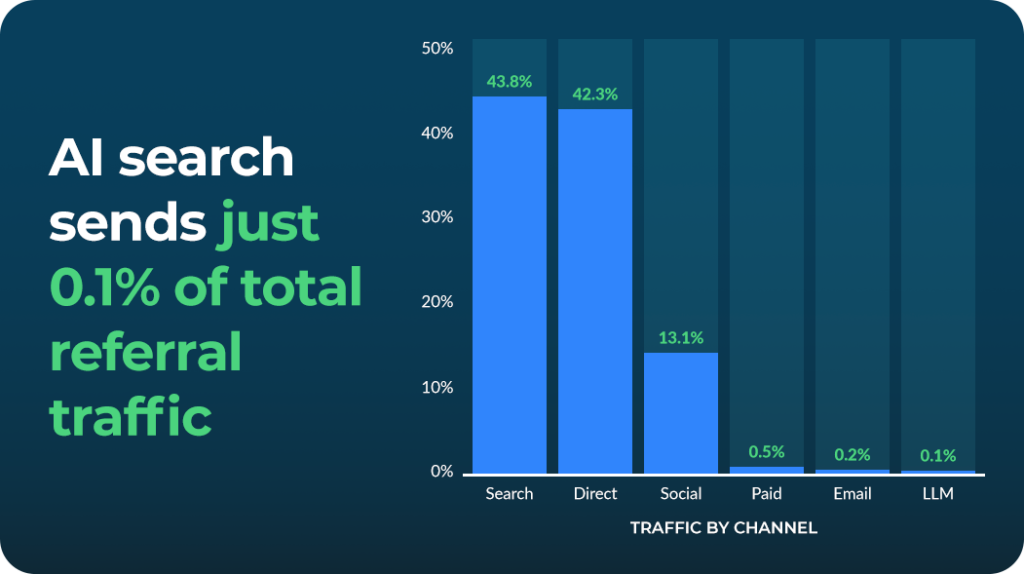
AI traffic is still a fraction of overall search, but its influence is growing faster than its share. Early positioning matters. The leasing teams and platforms building credibility with AI engines now will have a structural advantage as adoption accelerates.
The conversation has shifted from “are you on Google?” to “are you in the answer?” That distinction is worth raising with any client who still measures digital performance primarily through click-through rates or search ranking alone.