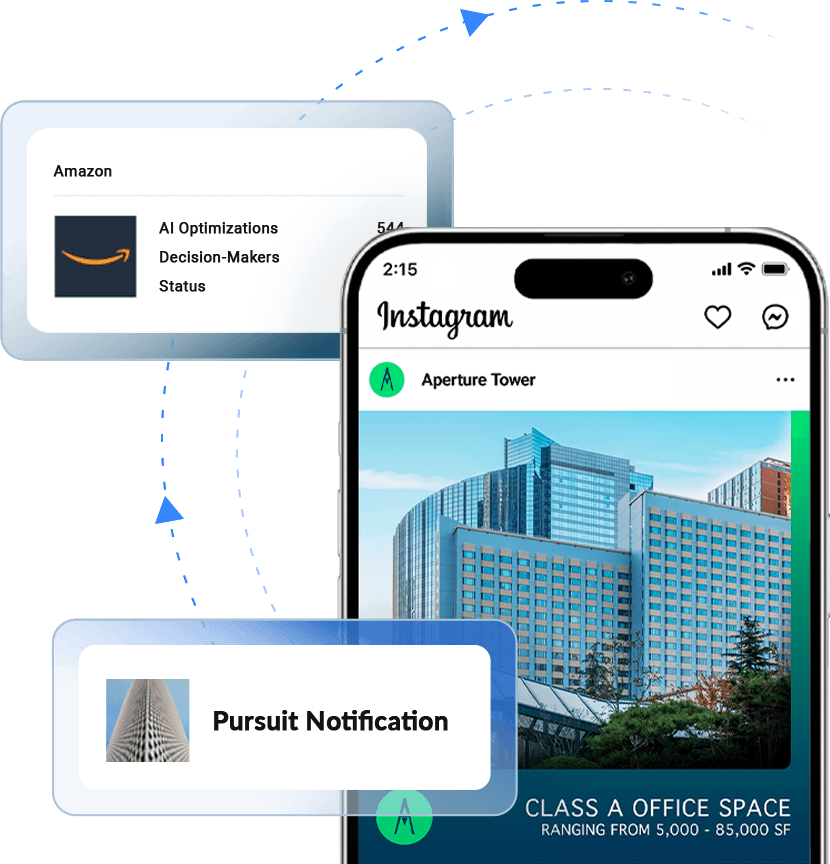
In commercial real estate, marketing has never been about reaching everyone. It has always been about reaching the right people.
The right broker. The right tenant. The right decision-maker. The right company before, during, and after they are actively evaluating space.
That is why targeting matters.
A marketing strategy can generate impressions, clicks, or traffic and still miss the people who actually influence leasing outcomes. For commercial real estate teams, the goal is not more activity for the sake of activity. The goal is better reach, stronger engagement, and more useful signals from the people who matter most to a deal.
That is the foundation of RealtyAds Targeting.
Reaching the Right People Is Real Estate Marketing 101
Most leasing teams already understand targeting intuitively.
A broker does not call every company in the market. They prioritize the firms most likely to move, expand, relocate, consolidate, or influence a requirement.
An asset manager does not evaluate marketing based on raw exposure alone. They want to know whether the right audience is seeing the building, engaging with the story, and moving closer to action.
A marketer does not need another report showing anonymous traffic without context. They need to understand whether the campaign is reaching the people who can influence leasing outcomes.
The challenge is that many traditional CRE marketing channels were not built for that level of precision.
Email blasts depend on static lists. Listing services depend on any person searching. Generic ad campaigns depend on broad targeting that may not understand the difference between a general business audience and the brokers, tenants, occupiers, and decision-makers that matter in a specific market.
RealtyAds was built to close that gap.
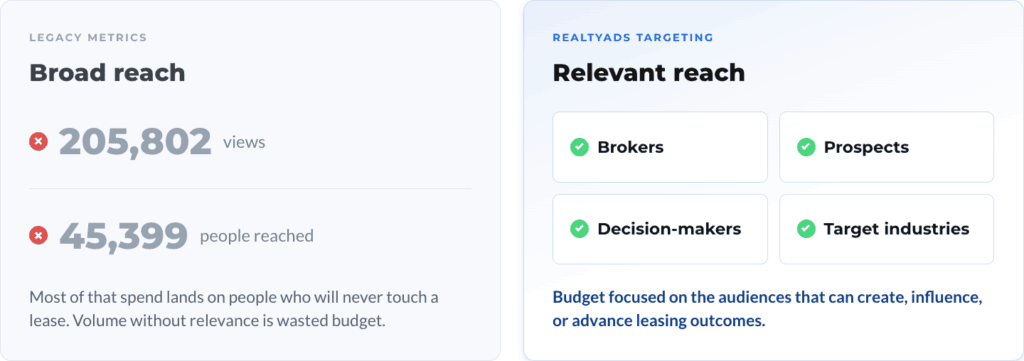
Better Targeting Creates Better Outcomes
Better targeting improves leasing performance in three important ways.
First, it reduces waste. If your campaign is reaching people who cannot influence the deal, budget is being spent on the wrong audience. Better targeting focuses spend on the brokers, tenants, companies, and decision-makers most relevant to the asset.
Second, it improves engagement quality. When messaging reaches people with a real connection to the market, asset class, industry, location, or requirement, the engagement becomes more meaningful. The goal is not simply to generate more digital activity. The goal is to create engagement that leasing teams can act on.
Third, it improves the intelligence available to the client. When RealtyAds knows who a campaign is designed to reach, reporting becomes more useful. Broker reach, tenant engagement, website visits, prospect activity, and repeat engagement can all be interpreted through the lens of the target audience.
That is how targeting turns advertising into leasing intelligence.
Better targeting means better reach. Better reach means better engagement. Better engagement gives leasing teams a better chance to find, advance, and close more deals.
Standard Targeting Is Table Stakes
RealtyAds supports the standard targeting capabilities available through major advertising networks.
That can include common controls such as geography, channel-level settings, remarketing, platform-level audience tools, and other targeting capabilities available through major ad networks, depending on the channel and campaign configuration.
These capabilities matter. They are part of any modern digital advertising strategy.
But in commercial real estate, standard ad-network targeting is rarely enough on its own. The reason is simple: CRE audiences are niche, fragmented, and constantly changing.
Brokers move firms. Tenant representatives influence deals across markets. Decision-makers change roles. Companies shift priorities. Active prospects may not be publicly in-market yet. Competitive properties may be drawing attention from the same occupiers. Industry-specific demand can emerge before a formal requirement is visible.
That is why RealtyAds layers standard targeting with CRE-specific intelligence.
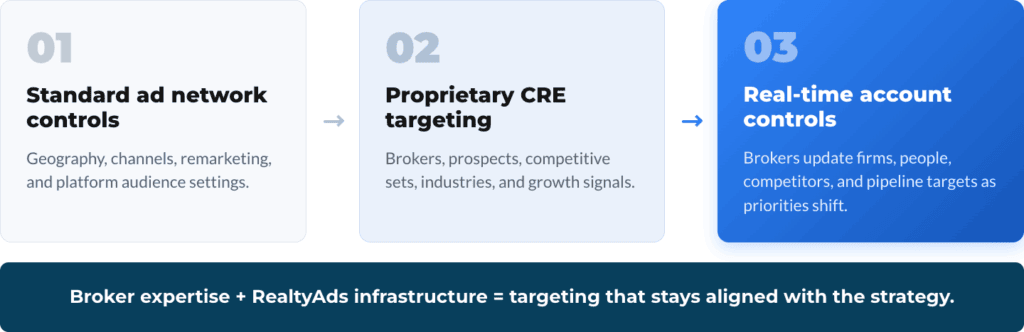
RealtyAds Adds Proprietary CRE Targeting
RealtyAds clients can access targeting settings designed specifically for commercial real estate. These settings are not generic advertising filters. They are built around how leasing actually works.
Broker Targeting
Reach the local brokers, tenant representatives, and producers influencing leasing activity in a market.
Prospect Targeting
Target specific companies or individuals that a leasing team wants to influence before, during, or after a tour.
Competitive Set Targeting
Engage decision-makers and companies connected to competitive properties.
Coworking Targeting
Reach companies or decision-makers connected to nearby flexible office environments.
Industry Targeting
Align outreach with industries most likely to value the asset’s location, amenities, access, or surrounding ecosystem.
Funding + Growth Signals
Engage companies showing growth, funding activity, hiring, or other signals that may indicate future real estate needs.
Pipeline + CRM Targeting: Use client deal data to help target prospects already moving through the leasing pipeline.
Targeting Should Not Be Static
The biggest mistake in CRE advertising is treating targeting as a one-time decision.
A leasing strategy changes constantly.
A new prospect tours. A broker introduces a requirement. A company re-engages on the website. A deal moves from early interest to proposal. A competitive building starts gaining traction. A market shifts. A leasing team changes priorities.
Targeting should move with those changes.
RealtyAds allows clients to adjust targeting settings as priorities evolve. That means teams can update who they want to reach, which firms matter most, which brokers should be prioritized, and which prospect groups should receive more attention.
This is where directed Targeting becomes powerful.
The broker or leasing team brings market expertise. RealtyAds brings the infrastructure to activate that expertise online.
CRM Integrations Make Targeting Even Smarter
For clients using a CRM or deal-management system, RealtyAds can become even more connected to the leasing workflow.
Instead of manually deciding which prospects should be targeted, clients can integrate RealtyAds with their deal data and allow targeting to reflect what is happening in the pipeline.
That creates a better loop:
- A prospect enters the pipeline.
- RealtyAds automatically engages the people connected to that opportunity.
- Website and campaign activity creates additional prospect signals.
- The leasing team can use those signals to prioritize follow-up.
- Marketing can use those signals to nurture opportunities with relevant content.
- Performance can be measured month by month through attribution reporting.
This is how RealtyAds Digital Infrastructure becomes part of the leasing process, not just a marketing layer sitting outside of it.
Targeting Can Be Managed in Real Time
RealtyAds clients can review and adjust targeting settings directly through their RealtyAds account.
That matters because leasing teams do not operate on quarterly planning cycles. Priorities change quickly, and digital strategy needs to keep up.
If a broker wants to add a target firm, update a prospect list, shift attention to a new industry, or support a priority pursuit, targeting should not require a long back-and-forth process.
Modern leasing requires speed.
RealtyAds Targeting gives teams a way to bring their market knowledge into RealtyAds and keep campaigns aligned with the opportunities that matter most.
The Bottom Line
In commercial real estate, the best marketing does not simply create exposure.
It creates relevant exposure.
It reaches the people who influence the deal, stays active as the opportunity evolves, and gives leasing teams better intelligence about who is engaging.
Standard ad-network targeting helps campaigns run. RealtyAds CRE-specific targeting helps campaigns work for commercial real estate.
Want to see how Broker-Directed Targeting works? Log in to your RealtyAds account to review your current targeting settings, or contact your RealtyAds representative to update the brokers, firms, industries, competitors, or prospects you want to reach.